
The hair follicle is a small but remarkably complex "mini-organ" embedded in the skin, with its own self-renewing cyclical activity. The average human scalp contains 100,000–150,000 follicles, while the whole body carries roughly 5 million.
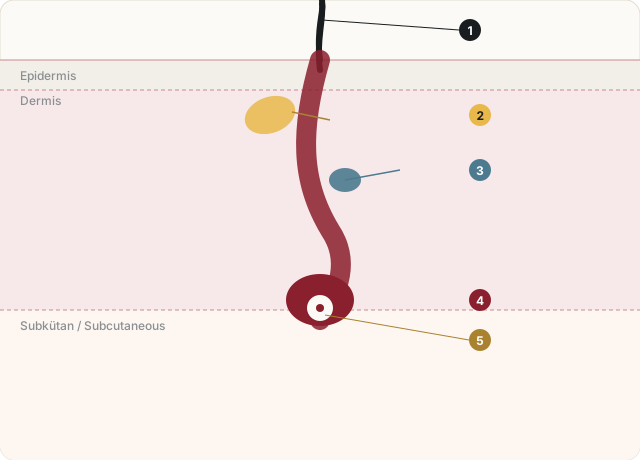
Core Structures
- Dermal papilla: A cluster of mesenchymal cells at the base of the follicle, nourished by blood vessels. It is considered the signaling center that drives hair growth.
- Matrix: Rapidly dividing keratinocyte cells surrounding the dermal papilla — the "factory" that produces the hair shaft.
- Inner and outer root sheaths: Layers that shape and support the growing hair strand.
- Bulge region: Home to the follicle's stem cells, and the critical zone that initiates each new growth cycle. Extracting a graft with an intact bulge is essential to transplant success.
- Sebaceous gland: Produces the oil (sebum) that lubricates the hair and skin.
Why it matters: For a graft to be considered viable in transplant surgery, the dermal papilla and bulge must be extracted without damage. The follicular transection rate is one of the most important indicators of a surgeon's or clinic's technical quality.
Follicular Units
Hair on the scalp doesn't grow strand by strand — it grows in natural clusters of 1 to 4 hairs called follicular units. Modern techniques (FUE, DHI) preserve these natural groupings during transplantation, which is a major reason results look more natural than older methods.